Thermal Performance
The thermal dissipation of the microFLUX is highly dependent on a number of factors including input voltage, output voltage, output current and ambient temperature. It is recommended to test microFLUX in your configuration and observe internal temperatures during operation or via extracting the logs using the Hargrave Configurator.
The thermal dissipation required per channel can be estimated using the Thermal Loss charts in the Thermal Loss section.
Typical performance characteristics measured at 25°C ambient temperature unless otherwise stated.
Output Current Rating
• 20 A / Channel
Derating may be required to prevent excess temperature depending on environmental conditions, thermal solution, unit configuration and input voltage. Parallel airflow over the unit using the available integration heatsink of 8 m/s (20 m/s without any heatsink) is sufficient to allow any configuration and any input voltage with a temperature rise of 50°C or less. Use the below graph to find an estimate of the airflow needed for your total current draw (sum of the current draw from both outputs).
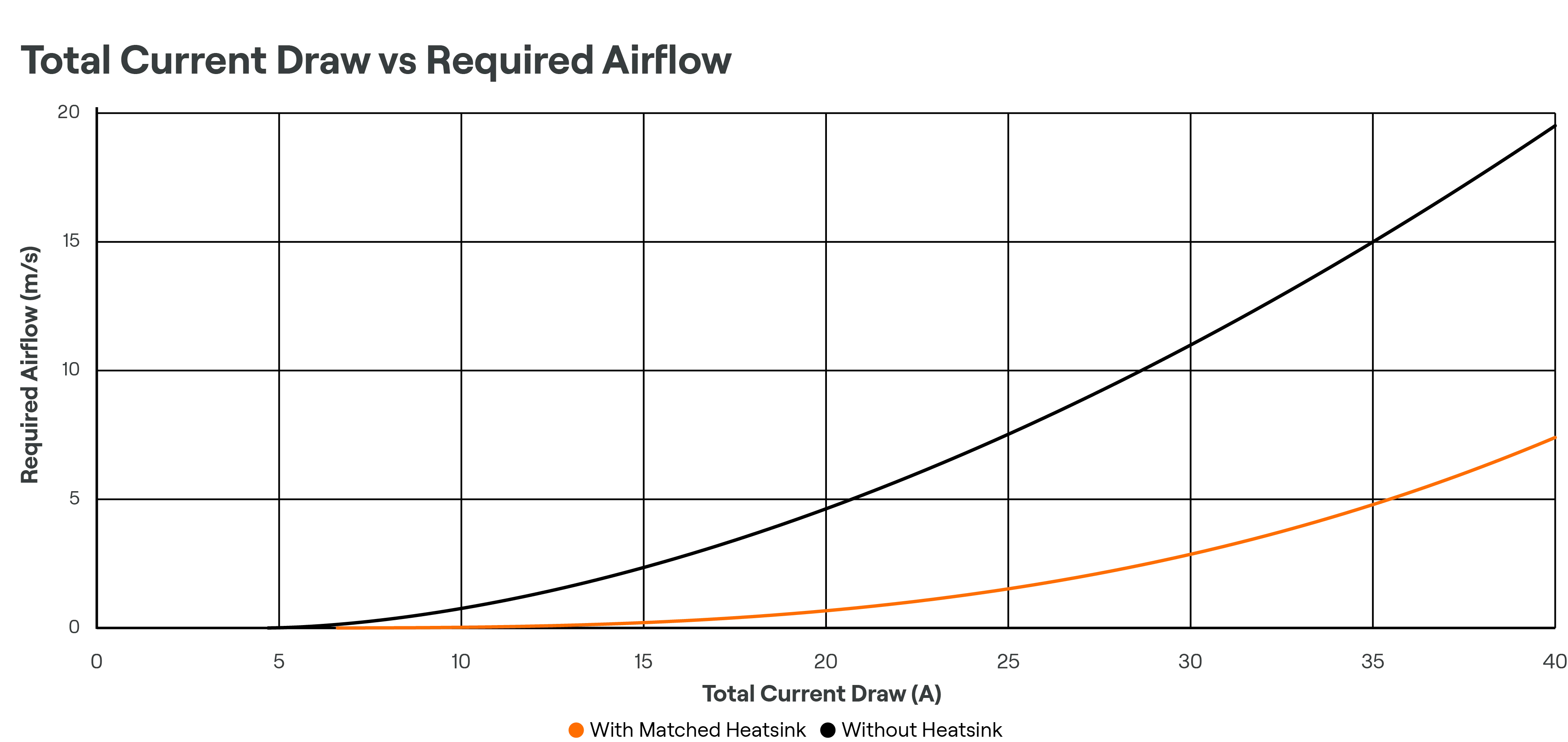
For more detailed optimization of the microFLUX 2MPi into your aircraft, use the Channels Loss graphs available in the Thermal LossThermal Loss section to find the loss for each output channel at its output voltage and current draw. Then use the sum of the losses for each of the channels and the graph below to find the perpendicular airflow needed to cool your unit.
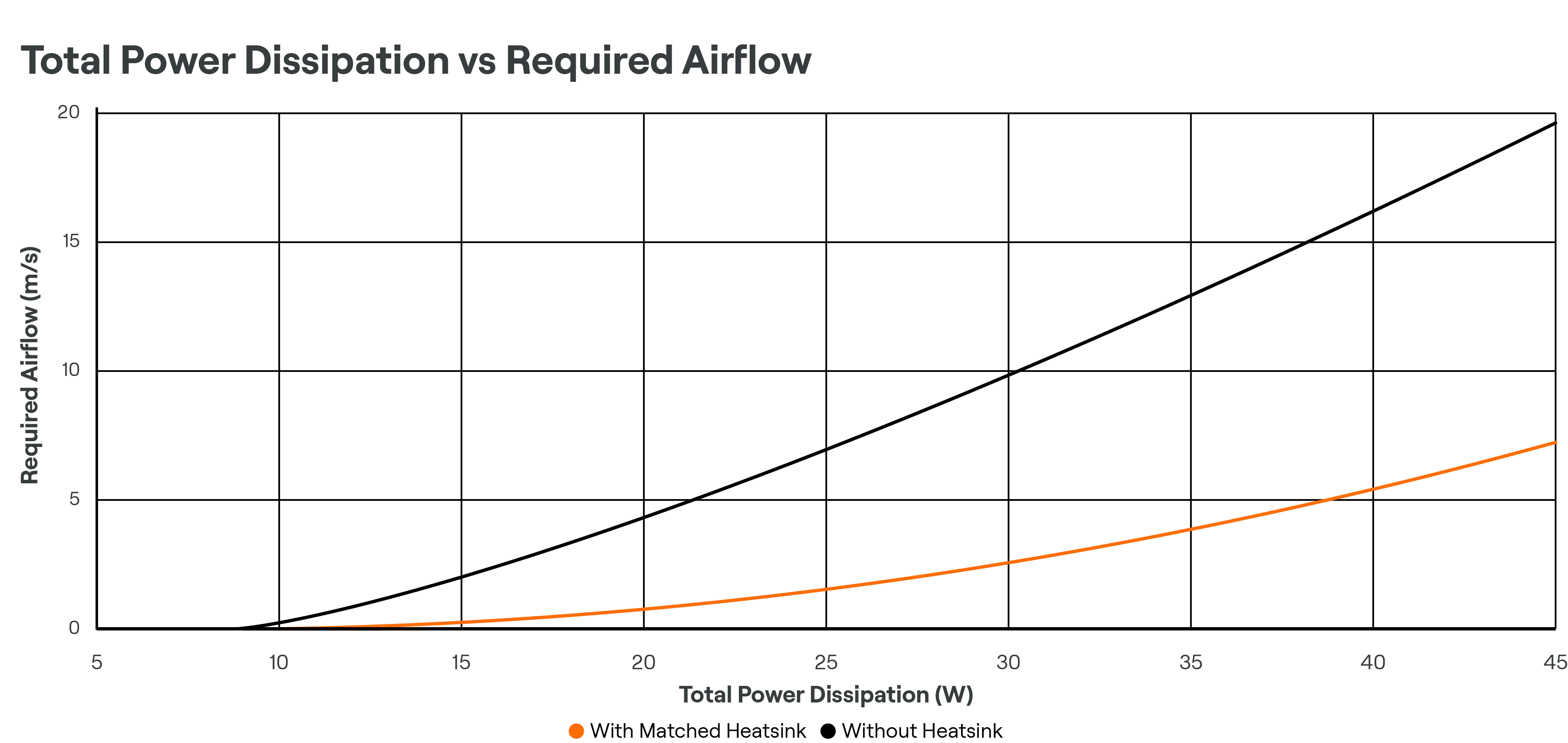
Please contact Hargrave if you need efficiency or loss information for configurations outside of those provided.